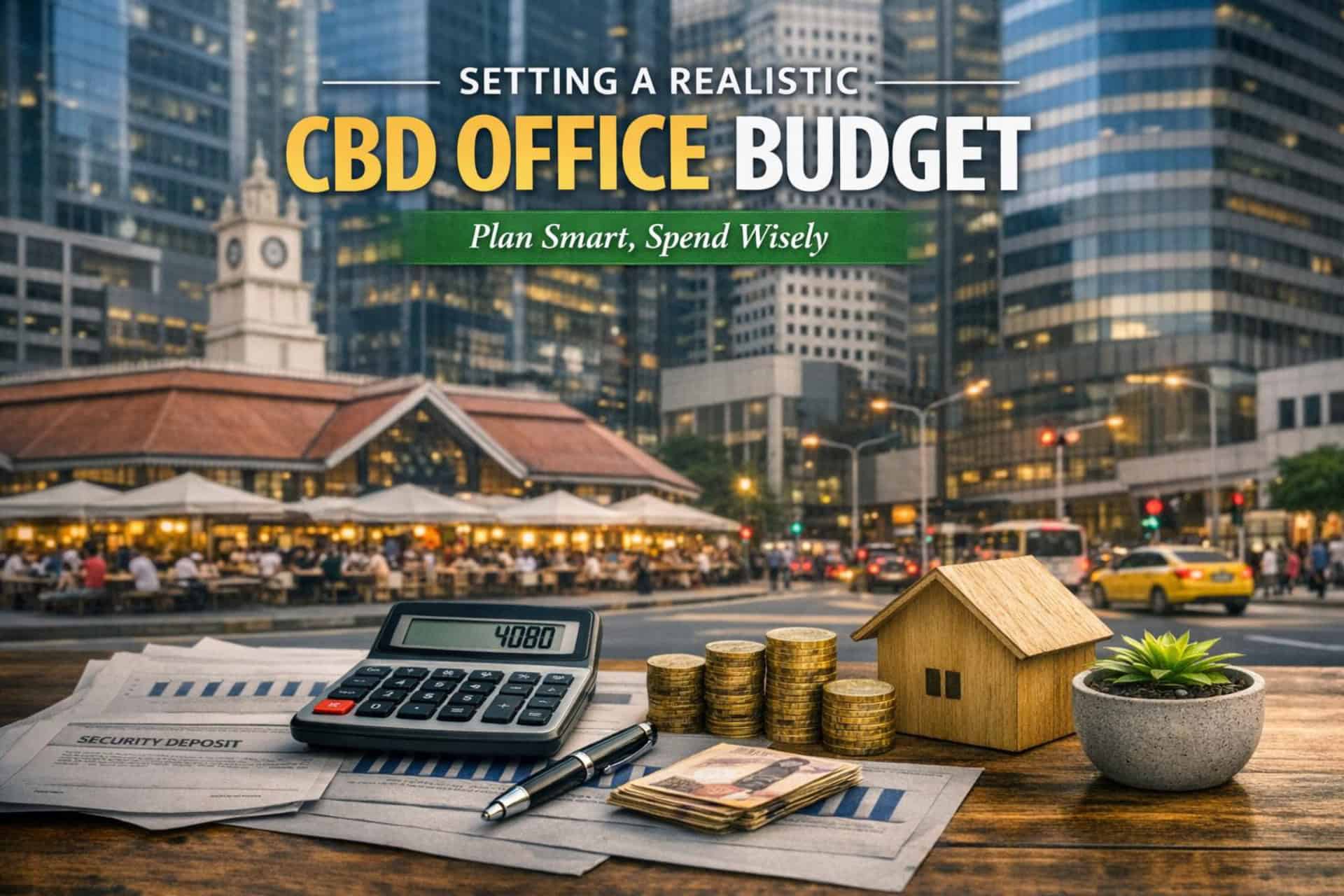
Renting an office in Singapore’s CBD is often a strategic move—it improves accessibility, strengthens brand positioning, and places your business closer to clients.
But one of the biggest risks tenants face is over-committing financially.
It’s easy to focus on the headline rental rate and underestimate the true cost of occupancy. A well-planned budget isn’t just about what you can afford—it’s about what your business can sustain comfortably over the lease period.
Here’s how to approach it realistically.
1. Start With What Your Business Can Sustain (Not Just What Looks Affordable)
Many tenants begin with a rough number based on current revenue.
A better approach is to ask:
- What monthly rental can we commit to without affecting cash flow stability?
- Can we comfortably sustain this for 2–3 years, even if business conditions change?
- Will this limit hiring, expansion, or other investments?
A CBD office should support your growth—not restrict it.
2. Understand the Full Cost (Not Just Rent)
The biggest mistake tenants make is focusing only on base rent.
In Singapore, the actual cost of an office typically includes:
Monthly Costs
- Rent (often inclusive of maintenance/service charge)
- Utilities (electricity, water)
- Internet and telecoms
- Cleaning and office upkeep
Upfront Costs
- Security deposit (usually multiple months’ rent)
- Legal and administrative fees
- Renovation or reinstatement works
Ongoing Considerations
- After-hours air-conditioning charges (if ap000000plicable)
- Office maintenance or repairs
- Future reinstatement costs at lease end
When these are factored in, the real cost can be significantly higher than expected.
3. Benchmark Against Market Reality
Before setting a budget, it’s important to understand what your budget can realistically get you in the CBD.
For example:
- A certain budget may secure a smaller space in a prime CBD location
- The same budget could get a larger office in city fringe or decentralised areas
This helps you decide early:
- Do you prioritise location or space?
- Are you flexible on building type or fit-out condition?
Being realistic about market expectations avoids frustration later in the search.
4. Allocate Budget Based on Team Size and Usage
Your office budget should align with how your team actually works.
Consider:
- Current headcount vs projected growth
- Hybrid vs full-time office usage
- Need for meeting rooms, collaboration space, or private rooms
Overestimating space needs can lead to:
- Paying for unused space
- Higher long-term costs
Underestimating can lead to:
- Space constraints
- Disruption and early relocation
The goal is to find the right balance—not the biggest space.
5. Avoid Over-Stretching for “Prestige”
A CBD address can enhance brand perception—but it shouldn’t come at the expense of financial stability.
Ask yourself:
- Will clients actually visit the office frequently?
- Does location directly impact revenue?
- Are there alternative locations that offer similar benefits?
In some cases, a slightly less central location can provide:
- Better value
- Larger space
- More operational flexibility
6. Build a Buffer Into Your Budget
A good rule of thumb is to leave room for flexibility.
Business conditions can change due to:
- Market shifts
- Hiring changes
- Economic conditions
Setting your budget too tightly leaves no margin for:
- Unexpected costs
- Rental adjustments
- Business expansion needs
A sustainable budget is one that allows you to operate confidently, not cautiously.
7. Time Your Search Properly
Budgeting is also linked to timing.
Starting your search 3–12 months before lease expiry allows you to:
- Compare more options
- Negotiate better terms
- Avoid last-minute decisions
Rushed decisions often lead to:
- Compromises on cost
- Limited negotiating power
8. Think in Terms of Total Occupancy Cost (Not Just Monthly Rent)
Instead of focusing only on monthly rent, look at:
- Total cost over the full lease term
- Cost per employee
- Cost relative to revenue
This gives a clearer picture of whether the office is financially sustainable.
Key Takeaway
Setting a realistic budget for a CBD office in Singapore is not about finding the cheapest option—it’s about finding a sustainable one.
A well-planned budget should:
- Reflect your business’s financial strength
- Account for all hidden and upfront costs
- Align with your operational needs
- Allow room for flexibility
The right office should support your business growth—not become a financial burden.
Common FAQs
1. How much should a company spend on office rent in Singapore?
It depends on the business, but the key is to ensure the rental is sustainable over the lease term without affecting cash flow or growth plans.
2. What is the biggest budgeting mistake tenants make?
Focusing only on base rent and overlooking additional costs such as utilities, deposits, and renovation expenses.
3. Is it worth paying more for a CBD office?
It can be, especially for client-facing businesses. However, tenants should ensure the benefits justify the higher cost.
4. Can I negotiate rental rates in the CBD?
5. Should I budget for renovation costs?
Yes. Even fitted offices may require some level of modification, and reinstatement costs should also be considered.
6. Is it better to get a smaller CBD office or a bigger suburban one?
It depends on priorities. CBD offers location and branding, while suburban offices typically provide more space for the same budget.
7. How early should I start budgeting and searching?
Ideally 3–12 months before lease expiry, depending on office size and complexity.
8. What is a safe way to avoid over-stretching?
Build a buffer into your budget and ensure the total occupancy cost fits comfortably within your business’s financial capacity.